Before you start
another diet read this.
Struggling to lose weight and keep it off
Discover the brain biology that may help explain stubborn hunger, frustrating plateaus and the return of weight you worked so hard to lose.
You can follow the rules. Change what you eat. Make time to exercise. See progress-and still find yourself fighting a stronger appetite as the weeks go by.
Before you decide that you simply need more discipline, there is another part of the story worth understanding.
Deep inside your brain, a small control centre helps regulate hunger, fullness and energy use. What happens when the signals reaching that centre change? And what are researchers discovering about inflammation in the system that helps regulate your weight?
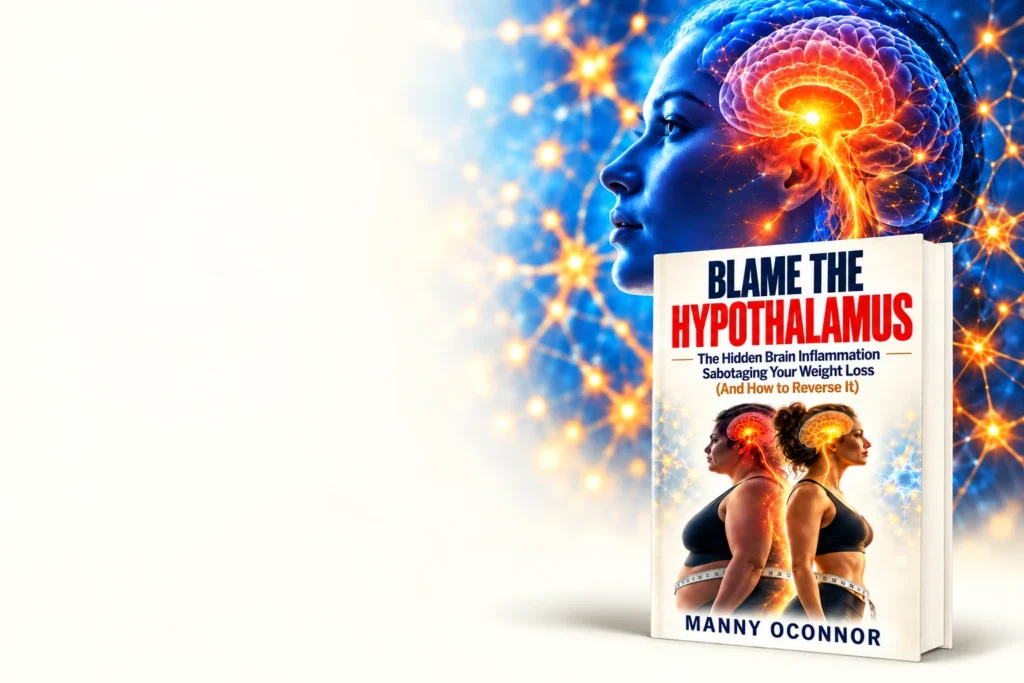
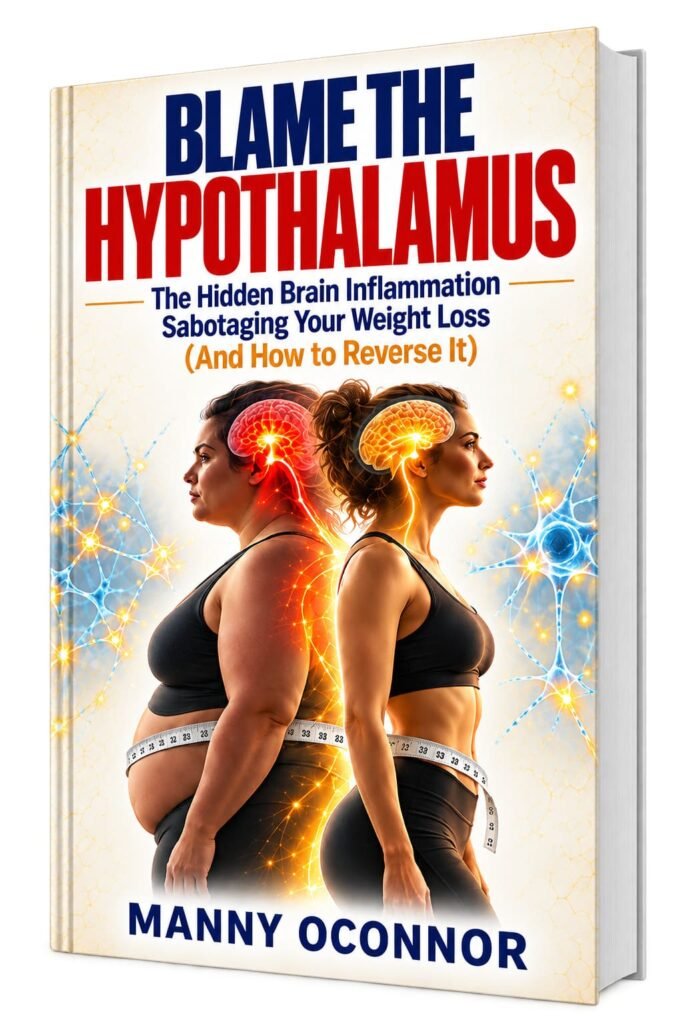
Blame the Hypothalamus by Manny Oconnor brings these questions into focus. Across 14 chapters, it connects the science of weight regulation with everyday strategies, medical approaches and research that could shape the future of treatment.
You will explore why weight loss can become difficult to maintain, what different approaches are designed to do, and how to think more clearly about your next step.
Why does progress.
become so hard to protect
At first, the changes seem manageable. You eat differently. The scale moves. Your clothes begin to feel more comfortable.
Then the experience changes. Hunger takes up more of your attention. Progress slows. Maintaining your new routine starts demanding more effort than it did at the beginning.
If you recognise that pattern, you deserve a fuller explanation than “try harder”.
This book explores how appetite signals, hormones and changes in energy use can influence the experience of losing weight. It also examines research into inflammation in the hypothalamus-the brain region at the centre of its story.
A small part of the brain with a much bigger role
The hypothalamus helps coordinate information about your body’s energy needs. The book explains how that information relates to hunger, fullness and the responses that can accompany weight loss.
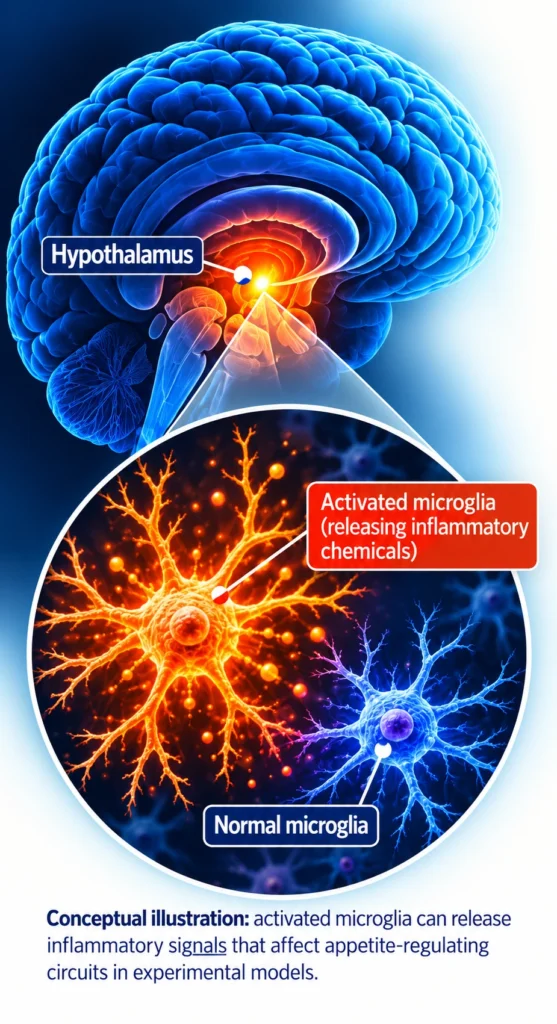
You will also explore why researchers are studying the brain’s supporting cells and inflammatory signalling, and what human imaging studies can-and cannot-tell us.
The research does not establish that brain inflammation explains every person’s weight difficulties. It opens a more useful set of questions about how weight regulation works.
The questions your next diet may never answer
- Why does hunger intensify after weight loss?
- Why does maintaining a lower weight require continuing effort?
- How might inflammation affect the systems involved in appetite regulation
- Which everyday habits deserve attention alongside food intake?
- How do researchers separate a promising idea from a treatment with convincing evidence?
Blame the Hypothalamus helps you explore those questions in accessible language, so the science becomes something you can understand and discuss.
Inside the book the discoveries behind the headline
The appetite signals changing medical weight managerment
Some medical approaches work through the biological messages involved in appetite and fullness. Discover why these pathways matter, how treatments are evaluated, and why benefits, side effects and suitability must be considered together.
The experimental approach targeting three pathways
Why are researchers investigating a single treatment designed to act on three hormonal pathways? Chapter 9 explores the scientific idea, the trial findings discussed in the book and the questions that still need answers. You will learn why encouraging early findings are different from established long-term evidence.
The disputed hormone and restricted diet approach
Chapter 10 examines a historical approach that paired a hormone with severe calorie
restriction. Why did it attract followers? What did controlled studies find? And why is the
difference between losing weight on a restricted diet and proving an added benefit from
a hormone so important?
This is an examination of its history, claims and limitations. The book does not present
the hormone as a proven weight-loss aid or invite you to copy a restrictive regimen.
The research looking beyond today's treatments
Explore how brain imaging, the brain's immune cells, communication between the gut and brain, and combinations of hormonal signals are shaping new research questions. Learn how to distinguish a future possibility from an option supported for use today.
You are purchasing an educational book. No medication, hormone, treatment or clinical service is included.
[PRICE AND CURRENCY] . Digital book . [CONFIRMED BILLING TERMS]
A clearer path through a complicated project
Part One understand the problem
Begin with the systems involved in hunger, fullness and energy balance. Explore the hypothalamus, inflammatory signalling, possible contributing influences and research into the body's responses to weight loss.
Part Two explore the options
Connect the biology with food quality, activity, sleep and other daily habits. Examine medical approaches alongside the evidence, limitations and uncertainties surrounding them.
Part Three look at the bigger picture
Explore emerging research, individual differences and a practical framework for organising your next steps. Learn why the strength of the evidence matters as much as the excitement of a new idea.
Written for people who want answers they can understand
You do not need a background in medicine or neuroscience. This book is for readers who want to understand recurring hunger and weight regain, make sense of treatment headlines, and ask better questions about their own options. It offers a way to look beyond the next meal plan and consider the biological systems influencing the experience of following it.

A message from
Manny Oconner
” I wrote Blame the Hypothalamus because I wanted to bring the science of appetite, hormones and weight regulation into language ordinary readers could understand. I wanted readers to see what researchers have discovered, where the uncertainties remain, and how that knowledge can inform their next conversation about weight management. “
– Manny Oconnor, Author
This offer is for a digital book. No printed copy or clinical consultation is included.
READER REVIEW EXAMPLE

SARAH MITCHEL
” For the first time, I felt I was reading something that explained the questions my previous diet books had left unanswered. The connections between hunger, the brain and weight regulation were fascinating. I finished with a clearer understanding and better questions to ask. “

DAVID COLLINS
” What impressed me most was how much there was to discover. The book goes beyond familiar advice and explores approaches and research I knew very little about. It made a complex subject feel accessible without losing the detail. “

RACHEL BENNET
” I appreciated that this book offered both explanations and a practical framework for reviewing everyday habits. The chapters helped me connect the bigger scientific picture with things worth considering in my own life. A thoughtful, absorbing read. “
blame the Hypothalamus
By Mannie Oconnor
Your purchase includes
The complete digital book with 14 chapters organised into three parts.
Accessible explanations of the hypothalamus, appetite, inflammation and metabolic adaptation.
Scientific illustrations that support the explanations.
Discussions of medical approaches, a disputed historical method and emerging research.
A phased framework in Chapter 12 for reviewing habits, priorities and questions for professional advice.
This offer is for a digital book. No printed copy or clinical consultation is included.
Checkout is processed by ClickBank. Your statement will show ClickBank or CLKBANK*COM.
Your questions
answered
Is this another diet book?
No. It is not another diet book. Blame the hypothalamus explores the biology of weight regulation and includes a practical framework for reviewing everyday habits.
Will I understand it without a science background?
Yes. The book is written for ordinary readers, with explanations of the scientific concepts and a glossary of key terms.
Does it cover practical steps as well as explanations?
Yes. Chapter 12 brings together food quality, movement, sleep, recovery and considerations for seeking professional advice in a phased framework.
Will I need to use medications or hormones?
No. These approaches are discussed for education. Buying the book does not require you to use any treatment, and it does not include access to one.
Will reading it guarantee weight loss?
No. The book provides information and a framework for understanding options. Individual outcomes vary, and no amount or speed of weight loss is promised.
How will I receive it and what if I want a refund?
You will receive [CONFIRMED FORMAT] through [CONFIRMED DELIVERY METHOD] within [CONFIRMED TIMEFRAME]. Read it using [CONFIRMED REQUIREMENTS]. Refund requests can be made within [CONFIRMED PERIOD] under [REFUND POLICY LINK], with order support at https://www.clkbank.com/.
give yourself a better starting point
Understand more about the systems that influence hunger, the evidence behind different approaches and the questions worth asking before your next step.
Discover Blame the Hypothalamus.
Important information
Educational and medical information
Blame the Hypothalamus is an educational publication, not individual medical advice, diagnosis or treatment. It does not establish that hypothalamic inflammation causes your weight difficulties or that reading the book will reverse inflammation or produce weight loss. Some approaches discussed are experimental, disputed or associated with significant risks. Consult a qualified healthcare professional before decisions involving medication, hormones or substantial dietary restriction.
Customer support
For Product Support, please contact the seller HERE [LINK TO SELLER
SUPPORT PAGE].
For Order Support, please contact ClickBank HERE [LINK TO
https://www.clkbank.com/].
Privacy Policy [LINK] | Terms and Conditions [LINK] | Refund Policy [LINK]
ClickBank retailer disclaimer
ClickBank is the retailer of products on this site. CLICKBANK® is a registered trademark of Click Sales, Inc., a Delaware corporation located at 1444 S. Entertainment Ave., Suite 410 Boise, ID 83709, USA and used by permission. ClickBank's role as retailer does not constitute an endorsement, approval or review of these products or any claim, statement or opinion used in promotion of these products.
Copyright 2026 Manny Oconnor. All rights reserved.